Articles
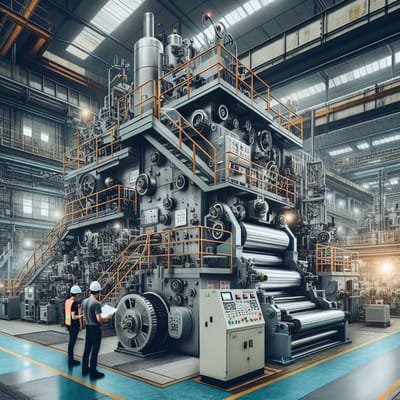
The Machinery Directive 2006/42/EC is a fundamental pillar of European regulation on the safety of machinery. By imposing harmonised requirements at EU level, this Directive aims to protect the health and safety of workers and users, while facilitating the free movement of machinery on the internal market.
Read More
In an increasingly complex and volatile world, the ability to anticipate and manage risks has become a crucial issue for the sustainability of companies. The document "Risk Analysis" is too often taken lightly by companies that design machines, this article invites you to dive into the heart of the methods and tools that will allow you to use this document as an aid and not as a burden.
Read More
Standards are documents that offer machine manufacturers technical solutions in accordance with the essential safety requirements set by the current Machinery Directive (2006/42/EC). It should be kept in mind that these standards are reference documents that are in no way mandatory, however compliance with a harmonized standard gives a presumption of conformity to European directives. Standards are documents composed of 3 series, A, B and C, they are published in EN format by the CEN (European Committee for Standardization) for example.
Read More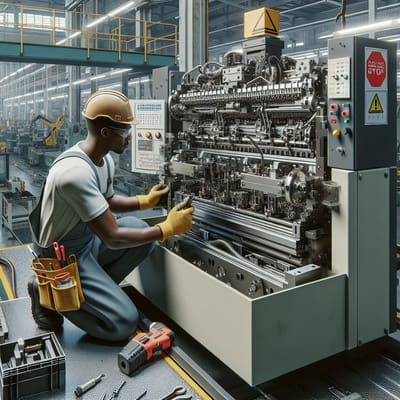
The modification of a machine, whether industrial or not, is a common operation in companies. It can meet different needs: improve productivity, adapt the machine to new constraints, extend its lifespan, etc. However, these modifications, if they are not carried out carefully and methodically, can generate significant risks for the safety of operators and the sustainability of the production tool. This is where the modification guide comes in. This document, often specific to each company or type of machine, aims to
Read More
This assessment must be carried out before a machine is placed on the market or put into service. It is mandatory; if the machine is not covered by Annex IV of the Machinery Directive, the procedure to be followed is that of conformity assessment with internal control of manufacturing (by the company that manufactures the machine).
Read More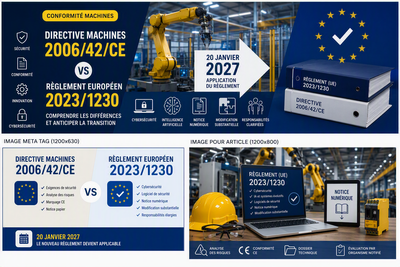
Discover the main differences between the Machinery Directive 2006/42/EC and the European Regulation 2023/1230, applicable from 20 January 2027.
Read More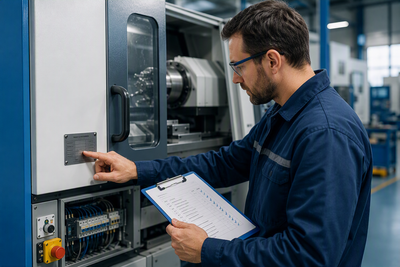
Découvrez les vérifications essentielles avant l'achat d'une machine d'occasion : marquage CE, documentation, sécurité, analyse de risques et conformité réglementaire.
Read More